California
Selling a Mobile Home in Roseville: Does Placer County Location Increase Its Value?
devs
Does a Roseville location raise your mobile home’s value? Learn how Placer County demand, lot rent, land ownership, condition, and park…
Read article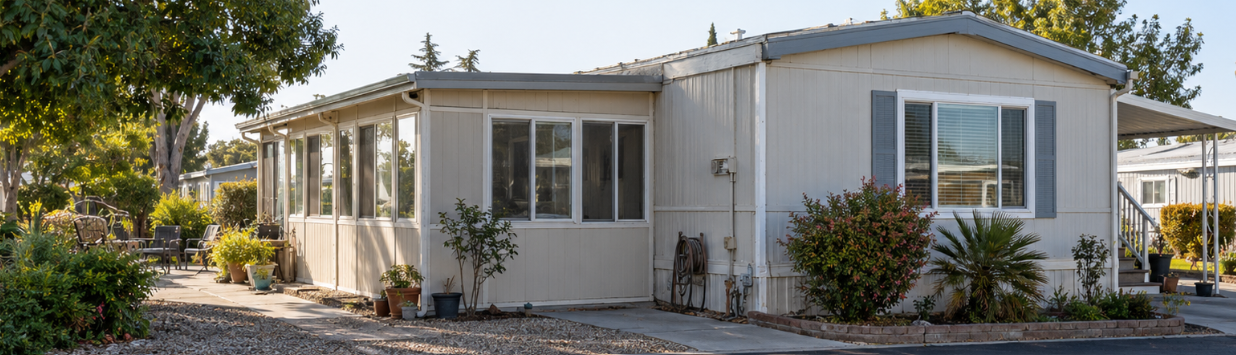
An unpermitted mobile home addition in California can complicate a sale, lower what some buyers will pay, and create questions about safety or whether the structure must be modified or removed. It does not automatically make the entire home unsellable. The outcome depends on what was added, how it was built, where the home sits, and whether the work can receive approval after the fact.
At Mobile Homes 4 Cash, we regularly talk with owners whose homes have enclosed porches, extra rooms, attached decks, carports, or other improvements with incomplete permit records. Before spending money on repairs or assuming you have to tear something down, find out exactly what exists in the official record.
An addition is unpermitted when someone constructs or alters a space without obtaining the required approval and inspections. In a mobile home, the issue could involve the home itself, a structure attached to it, or a separate accessory structure on the lot.
Common examples include:
Some improvements that look simple still affect structural loads, fire safety, emergency exits, plumbing, or electrical systems. That is why the absence of a permit matters even if the addition has stood for years without an obvious problem.
California’s manufactured housing rules are different from the rules for a conventional site-built house. The California Department of Housing and Community Development, commonly called HCD, oversees many alterations to mobile and manufactured homes. A local enforcement agency may handle certain work inside a mobile home park.
According to the state’s mobile home alteration permit guidance, HCD reviews plans and inspects alterations involving structural, fire-safety, plumbing, mechanical, and electrical systems. Start there or with the enforcement agency responsible for your park or property.
Do not rely entirely on what a former owner, neighbor, or park employee remembers. Older mobile homes often pass through several owners, and paperwork can disappear along the way.
Gather everything you have related to the work:
Next, contact HCD or the appropriate local enforcement agency. If the home sits inside a park, ask park management which agency handles construction permits there. Park approval and a government construction permit are not necessarily the same thing, so confirm both separately.
Look closely at how the addition connects to the original home. A freestanding deck creates different concerns from a room that shares the home’s roof, electrical service, or structural wall. The reviewing agency may ask for plans or an inspection before explaining the available path.
Sometimes. California owners may be able to apply for approval after construction, but approval is not automatic.
The agency may require plans showing how the addition was constructed. You could also need electrical load calculations, product specifications, engineering documents, or access to concealed framing and wiring. An inspector cannot confirm work hidden behind walls without seeing enough of it to evaluate safety.
Possible outcomes include:
The exact result depends on the type and age of the work, its condition, and the standards that apply to that structure. Speak with the responsible agency before hiring a contractor or beginning demolition. Removing materials too early could destroy useful evidence of how the addition was built.
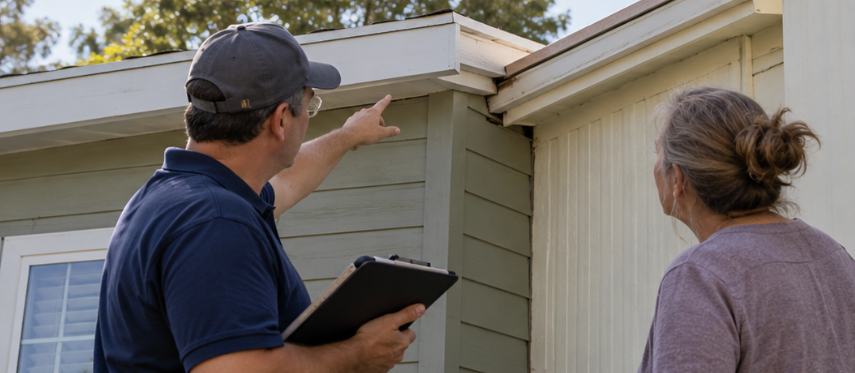
Many buyers become cautious when they see an addition that does not match the permit record. They may wonder whether the work is safe, whether the park approved it, and who will pay if the agency requires corrections later.
A traditional buyer could ask you to legalize or remove the addition before closing. Another may reduce the offer to account for the uncertainty. Some buyers will walk away entirely because they do not want to inherit the issue.
Financing creates another potential obstacle. A lender may rely on an appraisal, inspection, title review, insurance requirements, or other documentation before funding the purchase. If the addition cannot be counted as legal living space, the buyer may not receive value for that square footage in the appraisal. Serious safety concerns could also delay or prevent loan approval.
Cash buyers do not have a lender imposing those conditions, although they still need to evaluate the structure and its potential cost. That makes an as-is cash sale worth comparing when the permit issue would make a financed retail sale slow or uncertain.
Extra square footage does not always translate into extra market value.
A well-built permitted room may make a home more useful. An unpermitted room brings uncertainty, even if it looks attractive. A buyer may treat the space as a liability until the permit status and condition are clear.
The effect on value depends on several details:
The original mobile home still has value based on its age, size, condition, location, and land situation. Our mobile home value calculator gives you a quick starting range based on those core factors. Treat the calculator result as a baseline, then account for the addition separately after you understand its status.
This approach prevents you from automatically counting every added square foot as legal living area. It also keeps you from assuming the entire property has little value because one structure lacks paperwork.
A park home adds another layer because the homeowner usually owns the structure but leases the space underneath it.
The park may have its own rules for decks, awnings, sheds, room additions, setbacks, appearance, and contractor access. Management may also keep older approval records that the homeowner no longer has.
Ask the park:
A park’s written approval does not necessarily prove that the required construction permit was issued. The reverse can also happen. A government permit may exist even though the park’s internal paperwork is missing.
If you plan to sell, review how selling a mobile home in a park works before promising a buyer that the addition can remain.
Start with information, not construction.
First, confirm whether the permit is actually missing. Then ask the enforcement agency what it would require to approve the work. If corrections are possible, obtain realistic estimates from properly qualified contractors. Include plan preparation, permit fees, inspections, opening finished surfaces, repairs, and any extra lot rent or holding expenses in your calculation.
Legalizing the addition may make sense if the work is sound, the corrections are manageable, and the improved sale price clearly outweighs the cost.
Selling as-is may make more sense when:
Do not hide the issue or advertise the added area as permitted living space unless you have records supporting that claim. Give prospective buyers the information you have and put any agreement about the structure in writing.
An unpermitted addition changes the sale, but it does not erase your options. You can investigate after-the-fact approval, remove or correct the structure, market the home with full disclosure, or compare an as-is cash offer.
We buy mobile and manufactured homes throughout California, including older homes and properties that need repairs. Tell us what was added, whether the home is in a park or on private land, and what you know about the permits. Photos and available records give us a clearer picture.
You can learn more about selling a California mobile home as-is or request a no-obligation offer before paying for major corrections. Comparing the likely repair cost with an actual offer gives you a practical number to work with.
This article provides general information, not legal or construction advice. Permit jurisdiction and requirements vary by property, park, and type of improvement. Confirm the rules for your home with HCD, the local enforcement agency, park management, or an appropriately licensed professional.
More tips on selling your mobile home.
Does a Roseville location raise your mobile home’s value? Learn how Placer County demand, lot rent, land ownership, condition, and park…
Read articleWildfire insurance can make a California mobile home harder to sell. Learn how coverage, financing, FAIR Plan options, and cash sales…
Read articleRequest a free, no-obligation offer today and we'll get you a number fast, often within one day. Tell us about your home and we'll do the rest, right down to bringing the cash to your door at closing.